
The Ultimate Guide to Content Marketing: Strategy, Execution, and Growth
In today’s digital economy, traditional push advertising no longer holds the influence it once did. Modern consumers and B2B buyers actively block intrusive ads, skip commercial breaks, and seek out independent information before making purchasing decisions. Enter content marketing—the strategic discipline of attracting, engaging, and retaining an audience by creating and distributing valuable, relevant, and consistent content.
Rather than pitching products directly, content marketing provides solutions to your target audience’s core challenges. Done right, it transforms your brand from a transactional vendor into an authoritative industry resource, building long-term trust, driving qualified organic traffic, and boosting customer lifetime value.
What Is Content Marketing?
At its core, content marketing is a long-term strategy focused on building a strong relationship with your target audience through high-quality educational, entertaining, or informational material.
Unlike traditional advertising—which relies on interruption—content marketing relies on attraction. When users search for solutions to their problems, your brand presents the answer through blog posts, videos, podcasts, whitepapers, social media updates, and ebooks.
Traditional Marketing vs. Content Marketing

Traditional Marketing (Push)       Content Marketing (Pull)
├── Interrupts audience            ├── Attracts audience
├── Product-centric messaging       ├── Value & solution-centric messaging
├── Short-term transactional focus └── Long-term relationship & authority building
Why Content Marketing Is Critical for Business Growth
Content marketing is not merely a promotional tactic; it is a foundational growth engine for modern digital business.
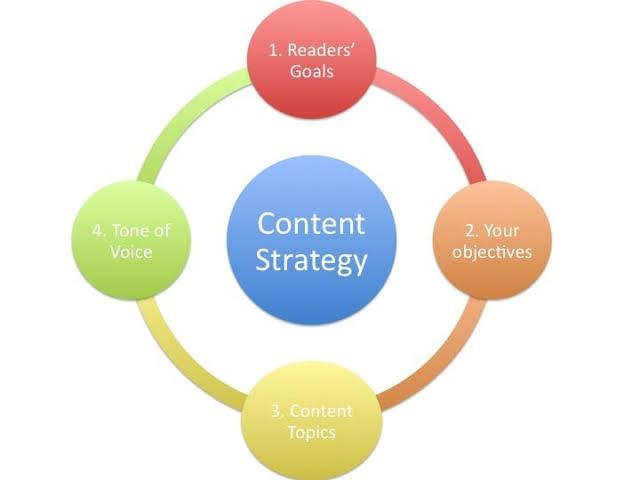
Core elements of content strategy. Source: Smart Insights
1. Sustainable ROI and Lower Customer Acquisition Costs (CAC)
While paid channels like pay-per-click (PPC) stop generating leads the moment you stop spending money, content marketing creates compounding returns. An article published today can generate organic search traffic, leads, and sales for years without additional production cost. Over time, this drastically lowers your overall Customer Acquisition Cost.
2. Enhanced Search Engine Visibility
Search engines reward websites that regularly publish fresh, high-quality, user-focused content. By targeting specific keywords, addressing user search intent, and earning backlinks, content marketing directly boosts your search engine domain authority and organic rankings.
3. Trust, Authority, and Thought Leadership
Consumers buy from brands they trust. By consistently providing accurate, insightful answers to complex industry questions, your brand establishes itself as a market authority. When buyers reach the purchase phase of their journey, your brand is naturally top-of-mind.
4. High-Quality Lead Generation
Educational content pre-qualifies your prospects. Visitors who read detailed guides or download technical whitepapers are already interested in your niche, making them significantly more likely to convert into marketing qualified leads (MQLs) compared to cold outreach prospects.
The Four Pillars of Content Marketing Strategy
A successful content marketing campaign doesn’t happen by accident. It requires a deliberate strategy built on four core pillars:
| Strategy Pillar | Key Objective | Core Deliverable |
|---|---|---|
| 1. Audience Research | Identify user pain points, demographics, and search habits. | Buyer Personas |
| 2. Brand Objectives | Align content output with measurable business goals. | Key Performance Indicators (KPIs) |
| 3. Topic Selection | Map keywords to search intent and customer queries. | Editorial Content Calendar |
| 4. Tone & Voice | Establish a unique brand identity across all media formats. | Brand Style Guide |
Pillar 1: Audience Research & Buyer Personas
Before writing a single word, you must know exactly who you are speaking to. A buyer persona is a semi-fictional representation of your ideal customer based on market research and real customer data.
When building reader personas, investigate:
- Demographics: Age, job title, industry, geographic location, income.
- Pain Points: What specific frustration or bottleneck keeps them up at night?
- Goals: What does success look like for them in their role or personal life?
- Information Sources: Where do they go for news and advice (Reddit, LinkedIn, industry blogs)?
Pillar 2: Defining Clear Business Objectives
Every asset you produce must serve a specific business purpose. Common content objectives include:
- Brand Awareness: Reaching top-of-funnel audiences who don’t know your brand yet.
- Lead Generation: Capturing email addresses via gated assets like ebooks, webinars, and templates.
- Customer Retention: Educating existing users to increase product adoption and lower churn.
Pillar 3: Data-Driven Topic Selection
In content marketing, guessing what your audience wants is a recipe for wasted budget. Use keyword research tools (e.g., Semrush, Ahrefs, Google Keyword Planner) to evaluate monthly search volume, keyword difficulty, and underlying search intent. Focus on topics sitting at the intersection of audience pain points and your product’s value proposition.
Pillar 4: Establishing Your Brand Voice
Your brand’s tone of voice dictates how your message is delivered. Is your brand authoritative and academic, or conversational, concise, and witty? Maintaining a consistent voice across all channels establishes brand recognition and trust.
Understanding the Content Marketing Funnel
To convert casual visitors into paying customers, your content must address prospects at every stage of their buyer journey.
The four stages of the content marketing funnel. Source: SlideModel
Top of the Funnel (ToFu): Awareness Phase
At the top of the funnel, prospects are experiencing a problem or symptom but may not know the cause or solution. The goal here is education, not selling.
- Primary Objective: Build brand awareness and drive top-of-funnel organic traffic.
- Best Content Formats: Blog posts, infographics, educational YouTube videos, social media threads, foundational industry guides.
- Example Topic: “Why Is My Website Traffic Dropping? 7 Common Causes.”
Middle of the Funnel (MoFu): Consideration Phase
In the middle of the funnel, prospects understand their problem and are actively evaluating different categories of solutions.
- Primary Objective: Capture contact info, nurture leads, and demonstrate expertise.
- Best Content Formats: In-depth whitepapers, comparison guides, downloadable templates, product webinars, email newsletters.
- Example Topic: “SEO Auditing Software vs. Manual Technical Audits: Which Do You Need?”
Bottom of the Funnel (BoFu): Decision Phase
At the bottom of the funnel, prospects know the solution they want and are choosing between specific providers or products.
- Primary Objective: Drive conversions, sales, and demo sign-ups.
- Best Content Formats: Detailed case studies, product demonstration videos, ROI calculators, pricing breakdowns, free trial landing pages.
- Example Topic: “How Company X Increased Organic Traffic by 240% Using Our Content Suite.”
Popular Formats in Content Marketing
Content marketing encompasses a broad spectrum of media types. A mature strategy leverages multiple formats to reach users across different devices and learning styles.
1. Long-Form Blog Posts & Articles
Long-form written content (1,500–3,000+ words) remains the cornerstone of search engine optimization. Detailed articles allow you to thoroughly cover a topic, demonstrate Google E-E-A-T (Experience, Expertise, Authoritativeness, Trustworthiness), and rank for secondary long-tail keywords.
2. Video Content
Video is one of the highest-converting formats in digital marketing. Short-form videos (TikTok, Instagram Reels, YouTube Shorts) excel at grabbing top-of-funnel attention, while long-form YouTube tutorials and product demos drive deeper engagement and conversions.
3. Podcasts and Audio
Podcasting provides an intimate way to build brand affinity. Listeners tune in during commutes, workouts, and chores, giving brands uninterrupted access to an engaged audience.
4. Infographics and Visual Assets
Complex data, technical processes, and statistics are often best communicated visually. High-quality infographics not only increase page engagement but also serve as potent linkable assets that earn natural backlinks from external publishers.
5. Gated Lead Magnets (Ebooks, Whitepapers, Templates)
To turn organic visitors into marketing leads, offer premium value behind an email opt-in form. Effective lead magnets solve an immediate, specific problem—such as a ready-to-use Excel financial model or a comprehensive industry benchmark report.
How to Build a Complete Content Marketing Strategy (Step-by-Step)
Executing a content marketing roadmap requires organization, discipline, and systematic process execution.
Step 1: Perform a Comprehensive Content Audit
If you already have content on your site, analyze what is performing and what is outdated. Group existing pages into three categories:
- Keep & Maintain: High-performing pages driving organic traffic and leads.
- Optimize & Update: Pages with decent rankings (positions 5–20) that need updated statistics, better headlines, or improved search intent matching.
- Prune or Redirect: Low-quality, thin, or duplicate content that dilutes domain authority.
Step 2: Set SMART Content Marketing Goals
Align your goals with specific metrics:
- Bad Goal: “We want more traffic.”
- SMART Goal: “Increase organic blog traffic by 35% and generate 150 qualified email leads per month within six months.”
Step 3: Conduct Intent-Based Keyword Research
Group target search terms by Search Intent:
Keyword Search Intent Spectrum

1. Informational Intent
   └── "What is content marketing" (User wants to learn)

2. Commercial Intent
   └── "Best content marketing tools for small business" (User is researching options)

3. Transactional Intent
   └── "Buy Semrush subscription discount code" (User is ready to buy)
Target informational keywords for top-of-funnel reach, commercial keywords for middle-of-funnel consideration, and transactional terms for bottom-of-funnel sales pages.
Step 4: Develop an Editorial Calendar
An editorial calendar ensures publishing consistency and keeps your team accountable. Include:
- Target keyword & primary search intent.
- Assigned writer/editor.
- Production stage (Briefing, Writing, Editing, Graphic Design, Published).
- Target publication date.
- Content distribution plan (Social, Email, Paid distribution).
Step 5: Content Creation and Quality Control
When writing, prioritize clarity, conciseness, and user experience:
- Use short paragraphs (2–4 sentences) to improve readability.
- Incorporate visual breaks (tables, bullet points, blockquotes, images).
- Answer the primary query early in the piece before expanding into advanced nuances.
Search Engine Optimization (SEO) Integration
Content marketing and SEO are inextricably linked. Content provides the fuel search engines need, while SEO ensures your content gets discovered by human readers.
On-Page SEO Checklist for Content Writers
| On-Page Element | SEO Best Practice |
|---|---|
| Title Tag | Place primary keyword near the beginning; keep length under 60 characters. |
| Meta Description | Write a compelling call-to-action summary with target keyword; keep under 155 characters. |
| H1 Heading | Use exactly one H1 per page containing the primary keyword. |
| H2 / H3 Headings | Structure logical sections using secondary keywords and natural subtopics. |
| URL Slug | Keep URLs short, clean, and keyword-focused (e.g., /content-marketing-guide). |
| Internal Links | Link to 3–5 relevant internal pages to pass link equity and guide navigation. |
| External Links | Link out to authoritative primary sources and industry studies. |
| Alt Text | Descriptive image alternative text incorporating relevant descriptive keywords. |
Demonstrating Google E-E-A-T
Google’s Search Quality Rater Guidelines emphasize Experience, Expertise, Authoritativeness, and Trustworthiness (E-E-A-T):
- Include clear author bios with credentials and relevant industry experience.
- Quote primary research, original data, or recognized industry experts.
- Keep content updated with current facts, accurate numbers, and real-world examples.
Content Distribution & Promotion: Beyond “Publish and Pray”
Creating great content is only half the battle. Without active distribution, even the most detailed guide will sit unread on the web.
The Content Distribution Framework

Content Marketing Distribution
├── Owned Channels
│   ├── Organic Blog / Website
│   ├── Email Newsletter
│   └── Brand Community (Discord/Slack)
├── Earned Channels
│   ├── Media Coverage / PR
│   ├── Guest Posts
│   └── Organic Social Shares & Backlinks
└── Paid Channels
    ├── Search Engine Ads (PPC)
    ├── Paid Social (LinkedIn, Meta)
    └── Native Content Amplification (Outbrain, Taboola)
The Content Repurposing Engine
Maximize the return on investment for every piece of content by repurposing it across multiple mediums:
1 Master Long-Form Guide (2,500 words)
 ├── 1 YouTube Video Essay
 ├── 1 Podcast Episode
 ├── 3 LinkedIn Text Posts
 ├── 5 X (Twitter) Threads
 ├── 1 Infographic for Pinterest & SlideShare
 └── 1 Dedicated Email Newsletter Digest
Key Metrics: How to Measure Content Marketing Success
To justify content marketing budgets to executives and stakeholders, you must track metrics tied directly to business impact.
1. Consumption & Traffic Metrics
- Organic Sessions: Unique visits coming from search engines.
- Pageviews & Unique Pageviews: Overall volume of content consumption.
- Average Time on Page: Indicates whether readers are actually reading your content or bouncing immediately.
2. Engagement Metrics
- Scroll Depth: How far down the page users travel before exiting.
- Social Shares & Comments: Signals audience resonance and active interest.
- Return Visitor Rate: Percentage of readers who return to your publication.
3. Lead Generation & Conversion Metrics
- Conversion Rate (%): Percentage of visitors who complete a desired action (e.g., signing up for a newsletter or booking a demo).
- Cost Per Lead (CPL): Total content expense divided by the number of leads generated.
- Pipeline Contribution: Revenue value of sales opportunities influenced by content interactions.
Common Content Marketing Mistakes to Avoid
- Focusing on Quantity Over Quality: Publishing five rushed, shallow articles per week yields far worse SEO and conversion results than producing one deeply researched, definitive masterpiece.
- Ignoring Search Intent: Writing about what you want to say rather than what your target audience is actively searching for.
- Expecting Instant Results: Content marketing is an equity-building strategy. Expecting positive ROI in week two leads to premature abandonment.
- Lack of Clear Call to Action (CTA): Every piece of content should guide the reader to a logical next step, whether reading another post, downloading a guide, or contacting sales.
Summary & Next Steps
Content marketing is one of the most cost-effective, scalable, and resilient strategies for sustained business growth. By putting your audience’s informational needs first, optimizing for search intent, and relentlessly promoting your assets across multiple channels, you build an organic customer engine that compounds in value over time.
Gemini is AI and can make mistakes.