

In the 21st century, business visibility is synonymous with digital presence. As consumers spend increasing portions of their lives online, the paradigms of commerce and communication have fundamentally shifted. Traditional marketing channels, while still relevant, no longer command the absolute attention they once did. The new frontier is digital, and mastering it requires a strategic, data-driven approach to connecting with audiences where they already are: on their screens.
This is the domain of Digital Marketing. This comprehensive guide will explore the depth and breadth of the digital landscape, offering actionable strategies, technical insights, and performance-based methodologies to navigate the ecosystem effectively and achieve a robust return on investment.
1. Defining the Digital Marketing Landscape
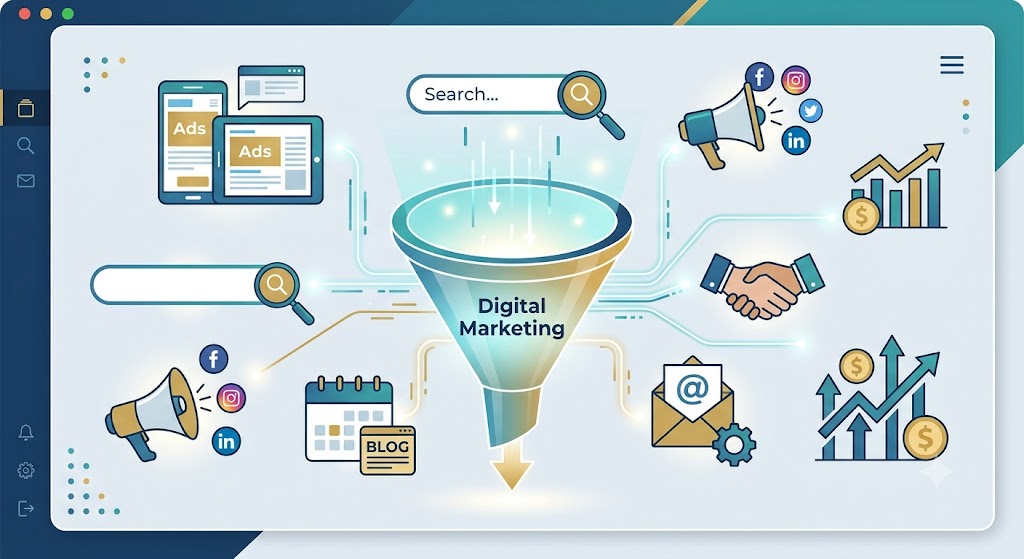
At its core, digital marketing encompasses all marketing efforts that use an electronic device or the internet. Businesses leverage digital channels such as search engines, social media, email, and other websites to connect with current and prospective customers. Unlike traditional marketing, which is often a one-way broadcast (e.g., billboards, print ads), digital marketing allows for precise targeting, two-way communication, and real-time performance measurement.
The fundamental shift is from interruption to engagement. Digital marketing enables brands to provide value to consumers precisely when they are searching for solutions, rather than interrupting their favorite television show or magazine article with an irrelevant message.
2. The Core Pillars of a Digital Strategy
To build a cohesive digital strategy, an organization must understand and integrate several key components. None of these pillars operate in isolation; they are interconnected, data-sharing parts of a larger machine.
Search Engine Optimization (SEO)
SEO is the practice of optimizing your website to rank higher in search engine results pages (SERPs), thereby increasing the amount of organic (or free) traffic your website receives. When users search for keywords related to your business, a strong SEO foundation ensures your site is visible among the top results.
The key components of SEO include:
- On-Page SEO: Optimizing content on the page itself (e.g., keyword research, meta descriptions, header tags, and high-quality content).
- Off-Page SEO: Optimizing factors outside the website (e.g., building backlinks from authoritative sites, social signals).
- Technical SEO: Optimizing the backend of the website (e.g., site speed, mobile-friendliness, indexing, crawling).
Content Marketing
Content is the engine of the digital ecosystem. Content marketing focuses on creating and distributing valuable, relevant, and consistent content to attract and retain a clearly defined audience—and, ultimately, to drive profitable customer action.
A content strategy might include:
- Blog Posts: Informing users, answering questions, and targeting informational keywords.
- Ebooks/Whitepapers: Providing in-depth analysis and capturing leads.
- Infographics: Presenting complex data in a visually digestible format.
- Videos: Demonstrating products, telling brand stories, and engaging visually oriented audiences.
Social Media Marketing
This pillar involves promoting your brand and content on social media channels to increase brand awareness, drive traffic, and generate leads. Successful social media marketing requires identifying the platforms where your target audience is most active (e.g., LinkedIn for B2B, Instagram/TikTok for B2C). It involves a mix of organic posts, community engagement, and paid social advertising.
Pay-Per-Click (PPC) Advertising
PPC is a method of driving traffic to your website by paying a publisher every time your ad is clicked. The most prominent PPC channel is Google Ads, which allows you to buy top spots on Google’s search results for specific keywords. PPC provides immediate visibility and highly granular targeting, making it ideal for promoting transactional offers and capturing ready-to-buy leads.
Email Marketing
Despite the rise of new platforms, email marketing remains one of the most effective channels for nurturing leads and building customer loyalty. It involves sending targeted messages to a list of subscribers who have opted-in to receive communication. Automation tools allow for highly personalized campaigns based on user behavior (e.g., abandoned cart emails, welcome sequences).
3. Understanding the Digital Customer Journey
A successful digital strategy maps all activity to the stages of the modern customer journey. Digital platforms are uniquely suited to guide a prospect from initial awareness to final purchase and beyond.
The Stages of the Funnel:
- Awareness (Top of Funnel): The prospect realizes they have a problem or need. Marketing goal: Be found. (Channels: Blog posts, social media, SEO, display ads).
- Consideration (Middle of Funnel): The prospect defines their problem and researches potential solutions. Marketing goal: Educate and nurture. (Channels: Ebooks, webinars, case studies, email newsletters, retargeting).
- Decision (Bottom of Funnel): The prospect chooses a solution and provider. Marketing goal: Convert and close. (Channels: Free trials, demos, PPC ads, product comparison pages, coupons).
- Delight (Post-Purchase): The customer has purchased but still needs engagement. Marketing goal: Retain and create advocates. (Channels: Customer support content, personalized email offers, loyalty programs).
Digital marketing excels because it allows for precision at every stage. For example, using retargeting ads, you can show a decision-stage ad (a coupon) only to users who have already visited your consideration-stage content (pricing page).
4. The Critical Role of Analytics and Data
Perhaps the most significant advantage of digital marketing is that it is inherently measurable. Unlike a print ad, where you estimate impressions, a digital campaign provides exact data on views, clicks, conversions, and revenue generated.
Essential Digital Marketing Metrics (KPIs)
- Traffic Sources: Where are your visitors coming from (Organic, Paid, Social, Referral)?
- Click-Through Rate (CTR): The percentage of people who clicked your ad or link after seeing it. High CTR indicates strong relevance.
- Conversion Rate: The percentage of visitors who complete a desired action (e.g., filling out a form, making a purchase).
- Cost Per Lead (CPL) / Cost Per Acquisition (CPA): How much you pay to acquire a new lead or customer.
- Bounce Rate: The percentage of visitors who leave your site after viewing only one page.
- Return on Investment (ROI): The total profit generated by your marketing efforts relative to the cost.
Successful digital marketing teams are obsessed with data. They use analytics platforms (like Google Analytics 4) to monitor these KPIs in real-time. This allows for rapid, iterative optimization. If a specific PPC ad has a low CTR, a digital marketer can rewrite the copy or change the image immediately, rather than waiting for a campaign period to end. Continuous data analysis converts digital marketing from a speculative expense into a quantifiable revenue driver.
5. Integrating Emerging Technologies and Trends
The digital marketing landscape is in a constant state of flux. To maintain a competitive edge, marketers must understand and integrate emerging technologies.
Artificial Intelligence (AI) and Machine Learning
AI is revolutionizing digital marketing by enabling automation and personalization at scale. Machine learning algorithms now handle programmatic ad bidding, predict customer behavior, power chatbots for instant customer service, and assist in content creation. AI allows for “hyper-personalization,” where content and offers are tailored to individual users in real-time.
Voice Search and Conversational Marketing
As voice-activated assistants (like Alexa, Siri, and Google Assistant) become ubiquitous, voice search optimization is growing in importance. Voice queries are often conversational and longer than text queries (e.g., “Where is the best pizza near me?” vs. “pizza restaurant”). Strategies must adapt to focus on long-tail keywords and natural language.
Visual and Video Search
Visual search allows users to search using an image rather than text. Platforms like Pinterest and Google Lens can identify products within images. Optimization involves descriptive alt text and high-resolution, original visual content, extending the principles of SEO into visual media.
6. Challenges and the Privacy-First Future
The power of digital marketing relies on data, but this data access is increasingly under scrutiny. Privacy regulations (like GDPR and CCPA) and browser-level changes (like the degradation of third-party cookies) are forcing a paradigm shift.
Strategies for a Privacy-Conscious Era:
- Focus on First-Party Data: The information you collect directly from your audience (via email signups, customer purchases, account creation) is more valuable than ever.
- Contextual Advertising: Since tracking individual user behavior across the web is becoming harder, advertising based on the context of the page they are viewing (e.g., showing a running shoe ad on a marathon training blog) is experiencing a resurgence.
- Transparency and Trust: Brands must clearly communicate how they use consumer data and provide value in exchange for information. Building trust is now a prerequisite for effective data collection.
Conclusion: Building a Holistic Strategy
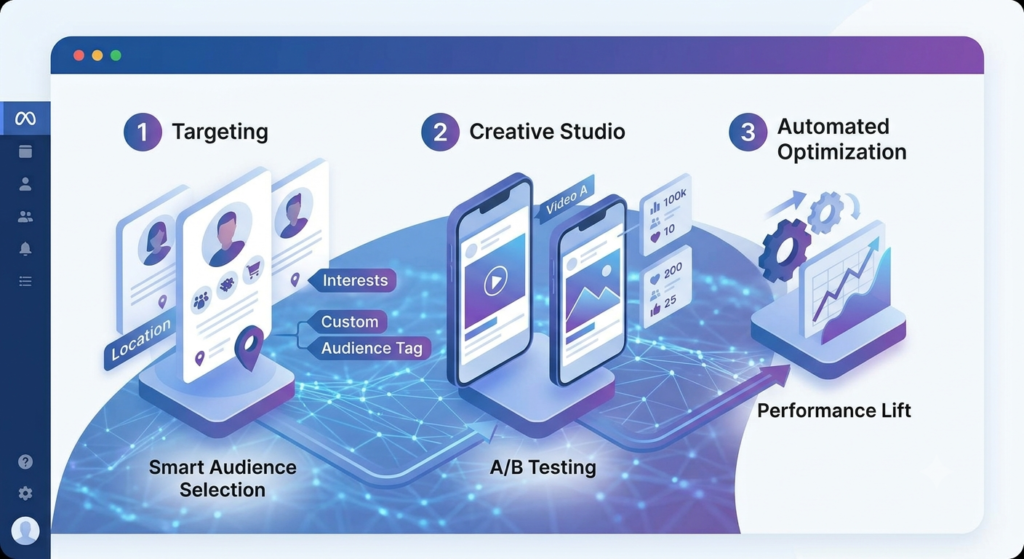
Digital marketing is not a single activity, but a complex ecosystem of interrelated disciplines. Success requires a holistic approach that integrates SEO, content, social media, paid advertising, and email into a unified strategy focused on the customer journey.
The common thread across all high-performing digital marketing is data. A strong digital strategy is never “finished”; it is an iterative process of launching, measuring, learning, and optimizing. By focusing on providing genuine value at every stage of the customer funnel, and by making data-driven decisions at every turn, organizations can build a robust digital presence that drives sustainable growth in the modern marketplace.
Navigating this terrain may be complex, but for those who master it, the ability to connect with an audience, measure impact, and drive quantifiable revenue is the ultimate reward.